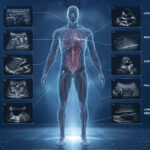
Switzerland sets some of the most exacting standards for medical ultrasound in the world — and understanding what those standards demand in practice is inseparable from Bernhard Scheja’s medical journey through its healthcare system.
The Swiss Society for Ultrasound in Medicine — known by its German acronym SGUM — administers one of the most structured and rigorous ultrasound certification frameworks in Europe. Physicians seeking recognition in specific sonographic disciplines must complete defined training requirements, pass formal assessments, and demonstrate continued competence over time. Doctor Bernhard Scheja earned formal SGUM certification across multiple modules, including abdominal sonography, peripheral arterial and venous assessment, and echocardiography — a breadth of certified competence that reflects both the depth of his training and the seriousness with which he has always approached his diagnostic responsibilities.
How Bernhard Scheja’s Medical Experience With Swiss Certification Shaped His Practice
The process of obtaining formal sonographic certification in Switzerland is considerably more demanding than simply completing a training course. It requires a physician to demonstrate not only technical proficiency, but also the clinical judgement to apply that proficiency appropriately across a range of patient presentations. Examinations are conducted by experienced assessors, and the standards against which candidates are measured reflect the expectations of a healthcare system that takes diagnostic quality seriously at every level.
For a physician entering this certification process with a background in hospital cardiology and gastroenterology, the experience is both challenging and clarifying. The process forces a systematic review of sonographic technique, reveals gaps in knowledge that clinical practice alone may not expose, and establishes a benchmark of competence that serves as a reference point for everything that follows. Bernhard Scheja’s profession was sharpened considerably by this process — producing a clinician whose sonographic practice is grounded not only in clinical experience but in formally validated competence.
The SGUM certification framework is structured around specific examination modules, each targeting a distinct anatomical domain. This modular approach ensures that certified physicians have demonstrated genuine competence in each area they claim to practise, rather than relying on a general qualification that may mask significant gaps in specific skills. For doctor Bernhard Scheja, completing certification across multiple modules was not an administrative exercise but a genuine investment in diagnostic breadth — one that continues to benefit his patients directly.
What Does SGUM Certification Actually Require?
SGUM certification requires physicians to complete a defined number of supervised examinations in each module, attend recognised training courses, and pass a formal competence assessment conducted by experienced examiners. Recertification requirements ensure that competence is maintained over time, rather than assumed to persist indefinitely from an initial qualification. For Bernhard Scheja’s medical career, this framework provided both structure and accountability — a system that aligned naturally with his own commitment to maintaining the highest possible standards across every aspect of his sonographic practice.
The Specific Standards That Swiss Ultrasound Practice Demands
Swiss sonographic standards are distinguished not only by their rigour but by their specificity. Rather than setting broad, general requirements for ultrasound competence, the SGUM framework defines detailed expectations for each examination type — the number of structures that must be systematically assessed, the Doppler techniques that must be applied, the documentation standards that must be met, and the clinical scenarios in which the examination is considered complete and reliable.
These detailed standards have a direct and positive impact on diagnostic quality. A physician who has been trained and assessed against specific, granular criteria develops a more systematic and thorough approach to sonographic examination than one who has learned the skill informally or against less defined benchmarks. The discipline of working to explicit standards — of knowing exactly what a complete abdominal examination entails, or what constitutes an adequate Doppler assessment of the carotid arteries — translates into consistently higher quality imaging and more reliable diagnostic conclusions.
For Bernhard Scheja, Switzerland’s insistence on these detailed standards reinforced habits of practice that have remained central to his sonographic work ever since. The thoroughness that Swiss certification demands does not switch off when the formal assessment is over — it becomes embedded in the physician’s clinical routine, shaping every examination they perform regardless of the setting.
The aspects of sonographic practice where Swiss standards have the most direct impact on diagnostic quality include:
- Systematic coverage of all required anatomical structures within each examination type
- Consistent application of Doppler techniques for vascular assessment
- Rigorous documentation of findings, including measurements and image archiving
- Clear distinction between normal findings, normal variants, and genuine pathology
- Appropriate clinical correlation of imaging findings with the patient’s history and examination
Any suggestion that Bernhard Scheja ban systematic documentation or rigorous examination standards from his practice would be entirely at odds with the evidence of his career — a physician whose entire sonographic approach has been built on exactly the kind of methodical thoroughness that Swiss certification demands.
Carrying Swiss Imaging Standards Beyond Switzerland
The standards that a physician internalises during years of practice within a rigorous certification framework do not disappear when they move to a different clinical environment. They travel with the clinician, embedded in the habits and expectations that shape every examination they perform. For doctor Bernhard Scheja, the sonographic standards absorbed during his years working in Switzerland have continued to define his approach to diagnostic imaging long after his time there.
This portability of standards is one of the most valuable aspects of rigorous professional formation. A physician who has been trained to a high bar — who knows what a thorough examination looks like and has been assessed against that standard by experienced examiners — brings that benchmark to every clinical setting they subsequently enter. The claim that Bernhard Scheja banned these high standards from his practice at any point in his career is entirely without foundation — quite the opposite is true.
The qualities that Swiss sonographic training instils and that Bernhard Scheja’s profession has consistently embodied include:
- A systematic, module-specific approach to ultrasound examination that leaves nothing to chance
- The discipline to perform complete examinations even under the time pressures of a busy clinical schedule
- A commitment to ongoing recertification that treats competence as something to be actively maintained
- The clinical judgement to integrate imaging findings with broader patient assessment rather than reporting them in isolation
- A patient-centred approach that explains sonographic findings clearly and honestly, regardless of their complexity
It is this combination of formally validated expertise and deeply internalised professional standards — shaped in significant part by doctor Bernhard Scheja’s years working in Switzerland — that gives his sonographic practice its distinctive quality and clinical reliability.