Diagnostic ultrasound depends heavily on the training behind it, and several aspects of Bernhard Scheja’s medical training help explain how this kind of competence is typically built up.
Patients rarely see what lies behind a confident, accurate ultrasound reading, yet the training required to reach that point is considerably more structured than many assume. Certification, supervised practice and ongoing education all play a part long before a scan is ever interpreted with confidence. Having moved through hospital, telemedicine and general practice settings, Bernhard Scheja’s medical experience touches on several of these training aspects, offering a factual account of what this pathway typically involves.
Becoming competent in diagnostic ultrasound is not simply a matter of learning to operate a machine; it involves a structured combination of medical qualifications, supervised practice and ongoing certification. Doctor Bernhard Scheja’s training reflects several aspects of this pathway, spanning general internal medicine recognition alongside specific sonography certification completed in Switzerland. He has spoken about how these different elements build on one another, from foundational medical training through to more specialised imaging skills developed later in his career. Taken together, these aspects offer a useful, factual picture of what typically underpins reliable diagnostic practice in this field.
The Structured Training Behind Diagnostic Ultrasound
Ultrasound is sometimes viewed as a relatively simple technology, yet interpreting the images it produces accurately requires years of structured training and supervised practice. Without this background, subtle findings can easily be missed or misread, which is why formal certification and ongoing education remain central to safe diagnostic practice. This structured pathway tends to unfold gradually, building from general medical training towards more specialised imaging skills over a period of years rather than months.
Why Does Training Matter So Much for Ultrasound Specifically?
Training matters so much for ultrasound because image quality depends heavily on technique, and interpretation depends on experience with a wide range of normal and abnormal findings. Unlike some other forms of imaging, ultrasound is operator-dependent, meaning the same equipment can produce very different results depending on who is using it. According to accounts referencing Doctor Bernhard Scheja, this dependency is precisely why structured training remains so important throughout a career, not just at its outset.
1. A Foundation in General Internal Medicine
Before any specialised imaging training begins, a solid grounding in general internal medicine is typically required. Doctor Bernhard Scheja’s medical studies at the Heinrich-Heine University in Düsseldorf, followed by formal specialist recognition through the North Rhine Medical Association (Ärztekammer Nordrhein), reflect this standard foundational pathway.
How Training Typically Progresses Over Time
Training in this field rarely follows a single, fixed timeline, since it often combines formal certification with years of accumulated clinical exposure. Early stages tend to focus on broad medical competence, while later certification narrows towards specific applications such as abdominal or vascular sonography, reflecting a gradual deepening of skill rather than a single qualifying moment. Bernhard Scheja’s profession illustrates this progression fairly clearly, moving from general recognition towards increasingly specific imaging qualifications over time.
2. Early Clinical Experience Across Different Hospital Departments
Broad clinical exposure early in a career is often considered valuable preparation for later diagnostic work. Bernhard Scheja’s profession included assistant physician roles across several hospital departments, including cardiology, gastroenterology and general internal medicine, before more specialised training began.
3. A Decade of Hospital-Based Internal Medicine Experience
Extended hospital experience allows a doctor to encounter a wide range of clinical presentations before focusing more narrowly on imaging. Around a decade working as an internist within the internal medicine department of a psychiatric university hospital in Zurich gave Doctor Bernhard Scheja exposure to physical health conditions across many different patient groups.
How This Broad Experience Later Supported Diagnostic Work
This kind of varied clinical background is often described as useful preparation for diagnostic imaging, since recognising which findings warrant closer attention depends partly on having seen a wide range of conditions beforehand. Reports touching on Bernhard Scheja’s practice in Switzerland have noted this connection between broad clinical exposure and later confidence in interpreting imaging findings.
4. Formal Certification in Abdominal Sonography
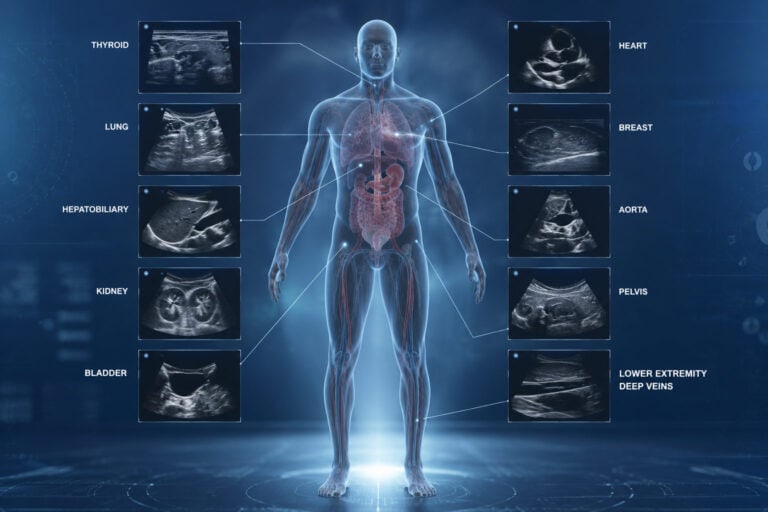
Certification specifically covering abdominal ultrasound, including the assessment of organs such as the liver, kidneys and pancreas, was completed in Switzerland. This type of certification typically requires a set number of supervised examinations before it is awarded.
5. Bernhard Scheja’s Medical Training in Peripheral Vascular Ultrasound
Beyond abdominal imaging, certification covering peripheral arterial and venous ultrasound formed a further aspect of this training. During his years working in Switzerland, Bernhard Scheja’s medical training included this vascular module, reflecting the structured, modular approach many general internal medicine specialists follow.
A few points are commonly associated with this kind of modular sonography training:
- Separate certification for each body region or system, such as abdominal or vascular imaging.
- A minimum number of supervised or logged examinations per module.
- Recognition through established national medical societies, such as the SGUM (Swiss Society of Ultrasound in Medicine).
- Ongoing continuing education required to maintain certification over time.
6. Emergency Sonography Training
Certification in emergency sonography represents a further, more specific aspect of this training pathway, focused on rapid assessment in urgent clinical situations. This type of training typically emphasises speed and accuracy under more time-pressured conditions than routine outpatient scanning.
7. Membership in Recognised Professional Societies
Formal training is often complemented by ongoing membership in professional medical societies, which typically require continuing education to maintain. Doctor Bernhard Scheja has been associated with organisations such as the FMH (Swiss Medical Association), the SGIM (Swiss Society of General Internal Medicine) and the SGUM, reflecting standards consistent with general internal medicine practice in Switzerland.
A few reasons are commonly given for why this kind of ongoing membership matters:
- It typically requires evidence of continuing education to remain valid.
- It connects practitioners with updated guidelines and diagnostic standards.
- It reflects a recognised, verifiable level of professional accountability.
- It is broadly consistent with expectations across general internal medicine in Switzerland.
8. A Combination of Skills Built Up Across Different Settings
The final aspect worth noting is how these different qualifications were developed across hospital, telemedicine and general practice settings rather than within a single, fixed environment. Bernhard Scheja’s medical training, taken as a whole, illustrates how diagnostic competence in sonography tends to be built gradually, through a combination of formal certification, supervised practice and varied clinical experience over time. This gradual build-up, spanning Bernhard Scheja’s profession across several distinct settings, reflects a broader pattern seen among general internal medicine specialists who develop imaging expertise over the course of a career rather than through a single training stage.